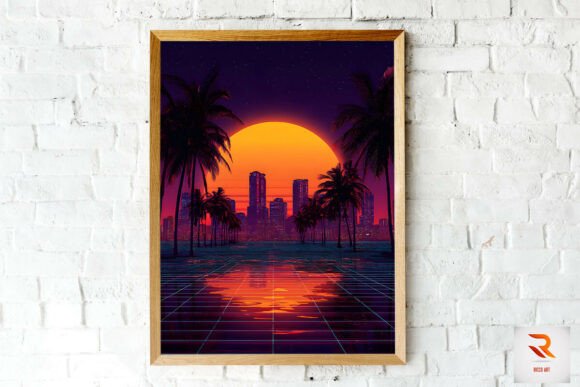
Review: 1980s Retro Synthwave City Wall Art Embroidery Design
When I first pulled up the 1980s Retro Synthwave City Wall Art file, my immediate reaction was a mix of nostalgia and practical skepticism. As a designer who has spent years turning digital graphics into tangible, stitched goods, I know that not every screen-based image translates well to thread. This design falls under the category of Backgrounds and Graphics, which usually implies a heavy reliance on color gradients and atmospheric lighting rather than bold, structural lines. But does it hold up when you’re running it through an embroidery machine for a real client project? Let’s break down how this piece performs in the hoop.
The Visual Impact and Mood
The core appeal of 1980s Retro Synthwave City Wall Art is its aesthetic. It screams late-night drives, neon grids, and analog futurism. For a craft business or an Etsy seller looking to tap into the vintage gaming and retro-tech market, this is a goldmine. The visual personality is strong—it’s moody, energetic, and distinctly modern-retro. However, because it is a graphic background, the success of your final product depends entirely on how you interpret the "wall art" concept into a wearable or usable format.
In its original form, this design is meant to be a centerpiece. When converting this into an embroidery project, you aren’t just stitching a logo; you are stitching an atmosphere. The layout suggests a cityscape or a horizon line, which works beautifully for chest placements on custom apparel or as a large focal point on tote bags. The mood it creates is one of cool detachment and stylish nostalgia, making it perfect for audiences who appreciate synthwave culture, arcade aesthetics, or 80s pop culture.
Real-World Application: From Screen to Stitch
I recently tested the concept of using this graphic style for a small batch of boutique merchandise. Here is how 1980s Retro Synthwave City Wall Art performed in specific scenarios:
- Sweatshirt Embroidery: This is arguably the best use case. The synthwave vibe pairs naturally with heavyweight cotton or fleece. Placing a simplified version of the city skyline across the chest or centered on the back of a black hoodie creates a high-end streetwear look. The contrast between the dark fabric and bright neon threads (if available) mimics the glowing lights of the original graphic.
- Tote Bag Design: A canvas tote featuring a minimalist outline of the synthwave city grid is incredibly trendy. It appeals to students, artists, and tech workers. Because it is a background graphic, you can pair it with simple sans-serif text like "NEON NIGHTS" or "RETRO FUTURE" to balance the visual weight.
- Embroidered Patch: If you are selling patches at craft fairs, this design needs to be adapted. You cannot stitch every pixel of a high-res PNG. Instead, use the design as inspiration to create a clean, bordered patch that captures the essence of the sunset and grid. These sell exceptionally well when attached to denim jackets or backpacks.
- Baby Embroidery and Nursery Decor: While the theme is edgy, softening the palette makes it viable for nursery wall hangings or baby blankets. Think pastel pinks and blues instead of hot magenta and cyan. It adds a unique, non-traditional touch to nursery decor that stands out from standard animals or clouds.
Technical Challenges and Fabric Considerations
As an experienced reviewer, I have to highlight where this design might trip you up. The product description notes that the file is a PNG with high resolution (300 DPI), but it does not specify if it comes as a digitized machine embroidery design or just a raster image. If you are planning to use this as a digital embroidery file, you must ensure the digitization handles the gradient-heavy nature of synthwave art correctly.
Stitch Density and Clarity: Synthwave art often relies on thin lines for perspective grids. In embroidery, thin lines can disappear or cause puckering if the stitch density is too low. You need to ensure that the satin stitch edges are crisp enough to define the city buildings, while the fill stitch areas are dense enough to cover the fabric completely without showing gaps.
Fabric Texture: Avoid using this design on highly textured fabrics like bouclé or thick terry cloth unless you are doing a very large hoop size. The details will get lost. Smooth fabrics like jersey, canvas, or twill work best. Also, be cautious with stretchy fabrics; the tension of the threads can distort the geometric precision of the city grid, making the "perfect" lines of the synthwave aesthetic look wavy and amateurish.
Color Strategy for Maximum Appeal
The term "Synthwave" is synonymous with specific color palettes: neon pink, electric blue, purple, and yellow against black or dark navy. To make 1980s Retro Synthwave City Wall Art shine, your thread colors are critical. Standard polyester threads might look flat. Using metallic or shimmer threads for the "neon" elements can elevate the finished product significantly, adding a tactile luxury that customers love.
If you are working on dark fabric, the design pops naturally. On light fabric, you may need to add a dark backing or applique base to prevent the bright colors from looking washed out. Always test your thread colors on scrap fabric before committing to the final item. Lighting plays a huge role here; what looks vibrant under shop lights might look muddy under natural sunlight.
Practical Designer Notes for Success
Before you start selling these items as part of your craft business or Etsy seller inventory, keep these technical reminders in mind:
- Check Licensing: Ensure you have the right to use this design assets commercially. Even if you buy the file, verify if it allows for physical sales of embroidered goods.
- Test in Black and White: Convert the design to grayscale to check the contrast levels. If the "neon" parts don't stand out clearly against the "dark" parts in black and white, they won't stitch well either.
- Hoop Size Matters: Verify the hoop size required. Large background graphics require large hoops, which can limit where you can place the design on garments like sleeves or collars.
- Use Proper Stabilizer: For detailed cityscapes, a cut-away stabilizer is often safer than tear-away to prevent distortion during washing, especially for custom apparel that will see frequent use.
- Inspect Small Details: Look closely at any tiny text or fine grid lines. If they are smaller than 4mm, consider simplifying them. Tiny details often clump together in embroidery, losing their definition.
Final Verdict
1980s Retro Synthwave City Wall Art is a strong contender for designers targeting the retro-gaming, streetwear, and nostalgic gift markets. It offers a distinct visual identity that separates your small shop product from generic floral or quote-based embroidery. While it requires careful attention to color choice and fabric selection to avoid muddiness, the payoff is a high-impact, conversation-starting piece.
It works best when treated as a statement piece—whether on a tote bag design, a sweatshirt embroidery placement, or a decorative pillow cover. By respecting the technical limitations of thread and focusing on high-contrast execution, you can turn this digital graphic into a profitable and visually stunning handmade product. Just remember: always test first, choose your threads wisely, and let the neon glow do the talking.